
Trainin'
How a Questionable Clinic Made Me a Better Educator

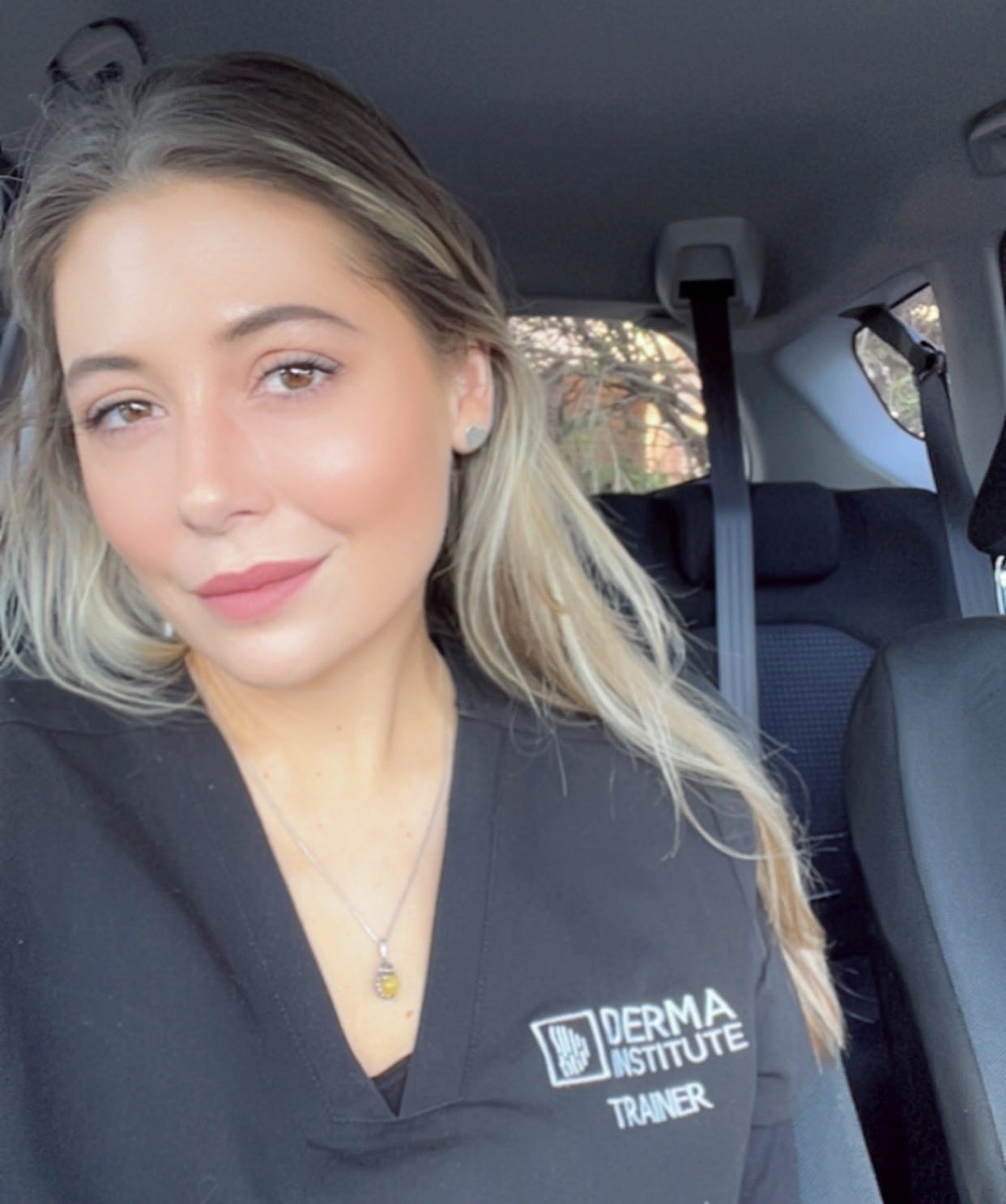
Recently, I became a clinical trainer in aesthetic medicine, and my journey as a trainer has been incredibly fulfilling. But if I’m honest, I wasn’t always passionate about teaching. Over the years, after treating countless faces and gaining a wide range of experiences, I realised something: why not turn my knowledge and experience into a way of helping others while creating another income stream?
Of course, some people may see it as a threat to their career—teaching others the skills and techniques of injecting and helping them build their own businesses. But I firmly believe that success in this industry isn’t determined by technical skills alone. It’s about your personality, the experience and service you provide, and even factors such as location.
At the end of the day, there is enough room for everyone to succeed. Sharing knowledge doesn’t diminish your value; it strengthens the industry and helps raise the standard of patient care.
I wasn’t always interested in teaching or sharing my knowledge, mainly because I never saw myself as someone with enough expertise to teach others. It wasn’t until I found myself working in a questionable clinic that I was thrown into the deep end.
The manager at the time informed me that I would be responsible for training a newbie nurse. Of course, I didn’t have much say in the matter, nor was I asked for my opinion. To be honest, I was completely opposed to the idea at first.
I didn’t even know where to begin. Do I start with anatomy? Products? Injection techniques? Patient consultations? Managing complications such as a vascular occlusion? The responsibility felt overwhelming. I remember feeling incredibly anxious at the thought of someone learning from me. This wasn’t just about teaching a new skill—it was about patient safety. In aesthetic medicine, one mistake can have serious consequences, and the thought of an inexperienced or overconfident nurse being let loose with a syringe was enough to keep me awake at night.
At the time, I didn’t realise that the very experiences making me feel unqualified were the same experiences that had equipped me to teach. I had spent years treating patients, navigating complications, solving problems, and learning lessons that couldn’t be found in a textbook. What felt ordinary to me was actually valuable knowledge that a new newbie desperately needed.
But once the training began, I realised something surprising: I actually knew my shit.
Excuse the language, but it’s true. Years of experience had given me a level of knowledge and confidence that I hadn’t fully recognised in myself. I had handled difficult patients, managed complications, navigated challenging situations, and developed clinical judgment that only comes from being in the industry day after day.
Imposter syndrome set in… and because of that, I was strategic about what I taught. With only two weeks to train this newbie, my focus wasn’t on making them an expert injector overnight. My goal was to give them solid foundations. If they left understanding the basics, patient safety, and professional standards, then I had done my job.
The experience came with its own learning curve—not just for them, but for me. I quickly realised that I had to change the way I communicated. The casual clinic jargon I used every day had to be translated into professional, educational language. Suddenly, I wasn’t just an injector; I was a teacher. We covered anatomy, consultation skills, bedside manner, patient communication, and the precision required for safe injecting. There were moments when I became frustrated, and I think that’s a normal part of teaching. I lost count of how many times I watched them hold a syringe like a dart, as though they were preparing to throw it in their faces rather than carefully place a product into tissue.
There were also times when they would speak about a patient’s concerns in front of the patient, unintentionally highlighting every flaw and insecurity the person had. Those moments taught me that being a great injector is about far more than technical skill. It’s about professionalism, empathy, communication, and understanding the responsibility that comes with treating another human being.
So I taught them not only how to inject, but how to carry themselves as a professional. I wanted them to walk into a training session with experienced clinicians and feel confident, competent, and respected—not embarrassed by bad habits that should have been corrected from the beginning.
That experience taught me something valuable about myself. While I had doubted my ability to teach, I discovered that I genuinely enjoyed helping others grow. More importantly, I realised that knowledge becomes far more valuable when it’s shared.
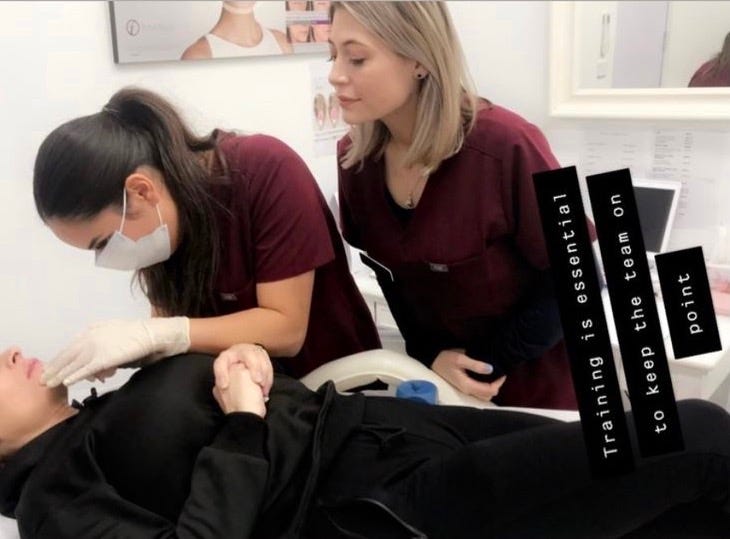
I remember one particular moment that stopped me in my tracks.
The questionable manager casually walked into the treatment room one day and mentioned that the newbie would soon be learning how to perform tear trough treatments using a cannula.
For those unfamiliar with aesthetic medicine, tear troughs are the hollow areas beneath the eyes that can create the appearance of eye bags, dark circles, or tiredness. A cannula is a long, blunt-tipped instrument used to place filler beneath the skin in this delicate area.
The moment those words left her mouth, fear hit me.
The newbie had only just started learning the basics. We had barely covered foundational injecting techniques, and they were only beginning to gain confidence with treatments such as anti-wrinkle injections and lip filler. Yet now there was talk of moving on to one of the more advanced procedures in aesthetic medicine.
In a well-structured clinic, tear trough treatments are not typically introduced to a beginner injector. Most practitioners spend months—often a year or more—developing their skills, understanding facial anatomy, recognising complications, and refining their technique before progressing to advanced areas of the face. This newbie had been training for barely a week.
I remember thinking, surely this is too soon.
The under-eye area is unforgiving. It requires precision, anatomical knowledge, patience, and clinical judgment. More importantly, it requires an injector who knows their limitations. The concern wasn’t whether the newbie could physically place a cannula beneath the skin. The concern was whether they truly understood what they were doing and, more importantly, what could go wrong.
For the first time since becoming a trainer, I realised that my responsibility wasn’t just to teach. It was also to advocate for patient safety. No amount of business pressure, profit, or ambition should ever outweigh the importance of proper training. Patients place enormous trust in practitioners, and that trust should never be treated as a shortcut to experience.
At that moment, I wasn’t worried about the newbie failing. I was worried about a system that expected someone with only a week’s worth of training to perform a treatment that experienced injectors approach with caution. But not surprised since this questionable clinic only cared about the $ at the end of the day.
Fear. Anxiety. Stress.
Those three emotions summed up exactly how I felt.
Despite my concerns, I did my best to teach them. I kept things as safe and controlled as possible because, in my opinion, they still hadn’t developed the technique required to confidently handle a cannula, let alone master the fundamentals of a syringe. My focus remained on building solid foundations rather than rushing into advanced procedures.
Unfortunately, the questionable manager wasn’t satisfied with the pace of learning. Remember it’s the $ that counts not the patient with these people.
As it often happened in that clinic, they decided to take matters into her own hands.
Looking back now, that experience taught me one of the most important lessons of my career: I would never train people this way.
About a week into the training, I was told to take the weekend off. I didn’t question it. In fact, I was relieved. I remember thinking, great, two days away from this place.
When Monday morning arrived, I walked back into the clinic and went straight into our training session. The newbie nurse seemed excited and eager to tell me about their weekend. That’s when they casually mentioned that the questionable manager had spent the weekend teaching them how to perform tear trough treatments.
I remember feeling my stomach drop.
Not because I was offended that someone else had trained them. My concern had nothing to do with ego. It was the realisation that a newbie nurse who had only been injecting for a matter of days had now been exposed to one of the most advanced areas of aesthetic medicine.
I sat there trying to process what I had just heard.
The previous week, we had still been working on the basics—how to hold a syringe correctly, patient communication, treatment planning, and injection technique. Now, somehow, we had skipped several chapters and jumped straight to advanced procedures.
It wasn’t confidence I felt in that moment.
It was concern.
Because training isn’t about teaching someone the most exciting treatment as quickly as possible. It’s about building competence layer by layer, ensuring that every new skill is supported by knowledge, experience, and good clinical judgment.
What I was witnessing wasn’t education. It was acceleration.
And in aesthetic medicine, those two things are not the same.
I don’t think I could have started sweating any faster.
When the newbie nurse told me they had been taught tear troughs over the weekend, I immediately asked, “What do you mean they taught you?”
The questionable manager wasn’t a medical professional. They weren’t a nurse, a doctor, or a qualified health practitioner. They simply were the clinic (questionable) manager—or at least that was their title. In reality, because it was a family-run business, the lines between management and clinical practice seemed completely blurred.
The newbie nurse looked uncomfortable as they explained what had happened.
They admitted that they had been terrified throughout the procedure. In fact, they told me that when they got home that night, they cried genuinely believing they have disfigured someone’s face. At this point they didn’t feel comfortable performing the treatment and knew deep down that they were not ready.
Hearing that broke my heart. Not because they lacked potential, but because they’ve been put in a position, that never should have happened.
At that point, I didn’t say anything to the questionable manager. I wanted more information before drawing conclusions. Part of me hoped there had been some misunderstanding.
Then, eventually, the questionable manager brought it up herself.
With a sense of pride, they casually mentioned that they had taught the newbie nurse how to perform tear trough treatments.
I remember asking a series of questions.
What product was used?
How much product was injected?
Who was the model?
The answers became progressively more concerning.
Then came the answer that completely stopped me.
The model. A 14-year-old girl.
I couldn’t believe what I was hearing.
My mind immediately went to the ethical, legal, and professional implications of what had taken place. Not only was a beginner injector being rushed into an advanced procedure, but the treatment had allegedly been performed on a minor.
To make matters worse, the person overseeing and teaching the procedure wasn’t medically trained. Wasn’t a doctor. wasn’t a nurse. let alone a healthcare professional. Yet they were instructing someone on products, injection depths, technique, and treatment protocols without any formal clinical education or qualifications.
Everything about the situation felt wrong. Evilly wrong.
As healthcare professionals, we are taught that patient safety must always come first. Training should be structured, supervised, and evidence-based. Every procedure should be performed with a clear understanding of anatomy, risks, complications, and informed consent.
What I witnessed was the complete opposite.
In that moment, I realised that my concerns about the clinic weren’t exaggerated. They were justified.
And more importantly, I realised exactly the kind of trainer I never wanted to become.
A good trainer doesn’t rush people into advanced treatments to satisfy business demands. A good trainer builds confidence, competence, and clinical judgment. They know when a practitioner is ready—and they know when they’re not.
Because at the end of the day, aesthetics isn’t about selling treatments.
It’s about protecting people. I mean any normal person in this situation would know their moral compass was spinning crazy.
My heart sank.
For a moment, I completely froze. Inside, my mind was racing through every possible scenario that could have gone wrong. But years of working in healthcare had taught me how to maintain a professional poker face. No matter what I was thinking internally, I didn’t let my emotions show.
The reality was that I felt sick.
Ethically, I knew the situation raised serious concerns. But I also knew how complicated things could become. I found myself caught between what I believed was right and the reality of the environment I was working in.
So instead, I quietly said a little prayer to myself and hoped that no one had been harmed.
I hoped that no complications would arise.
I hoped that everyone involved would walk away safely.
From that moment on, however, something became crystal clear.
I knew exactly what kind of trainer I wanted to be. And the kind-of people we were dealing with.
Ironically, I had genuinely enjoyed those two weeks of training. Despite my initial self-doubt, I found satisfaction in teaching, mentoring, and watching someone slowly develop confidence in their skills. Seeing those small moments of growth was incredibly rewarding. But that incident taught me more than any training course ever could.
Looking back, it’s no surprise that I was conveniently given the weekend off. Whether intentional or not, my absence meant there was no experienced healthcare professional present to witness what had taken place.
It also became clear that I wasn’t training the nurse according to their standards.
And that was because our standards were completely different.
My standards were centred around safety, education, competency, and responsibility.
Their standards appeared to be centred around speed, profit, and getting someone treatment-ready as quickly as possible. $$$
We were playing two entirely different games.
I wanted practitioners to understand anatomy before advanced procedures. I wanted them to recognise complications before they occurred. I wanted them to develop confidence through competence, not through being thrown into situations they weren’t prepared for.
The clinic wanted results.
I wanted responsibility.
The clinic wanted speed.
I wanted safety.
The clinic saw training as a pathway to revenue.
I saw training as a duty of care.
And that’s when I realised that being a trainer wasn’t just about teaching someone how to inject. It was about teaching them how to think, how to make safe decisions, and how to respect the trust patients place in our hands.
To this day, that experience remains one of the biggest influences on how I teach. Because if there’s one thing that questionable clinic taught me, it was exactly what not to do.

A few years later, and a long way from that questionable clinic, I found myself looking back on those experiences with a different perspective.
The good, the bad, and everything in between had taught me valuable lessons—not only about aesthetic medicine, but about leadership, responsibility, and the kind of professional I wanted to become.
That’s when I realised I genuinely wanted to teach.
I wanted to take the knowledge, skills, mistakes, and lessons I had accumulated over the years and use them to help others build successful and safe careers in aesthetic medicine.
Today, I have the privilege of working for an academy that values professionalism, education, and patient safety. It’s an environment that aligns with everything I believe good training should be.
I get to teach practitioners injecting techniques while educating them on far more than just where to place a needle. We discuss product selection, anatomy, facial assessment, treatment planning, placement techniques, complication management, and, most importantly, patient safety.
But some of my favourite conversations aren’t always about injecting.
They’re about the realities of being a nurse, a business owner, and a leader. We talk about confidence and imposter syndrome. We talk about difficult patients, boundaries, burnout, communication, and the emotional intelligence required to navigate this industry. We discuss the challenges of running a business while still trying to be a compassionate healthcare professional.
Because being a great injector isn’t just about technical skill.
It’s about judgment.
It’s about communication.
It’s about professionalism.
And it’s about understanding that every face you treat belongs to a person who has placed their trust in you.
Looking back, it’s funny to think that I once doubted whether I had anything worth teaching. The truth is, every patient, every challenge, every mistake, and every success contributed to the knowledge I now share with others. And while I may teach injecting techniques, what I really hope to teach is something much bigger:
How to become a safe, confident, ethical practitioner who never loses sight of why they entered this industry in the first place. And don’t do this for money.
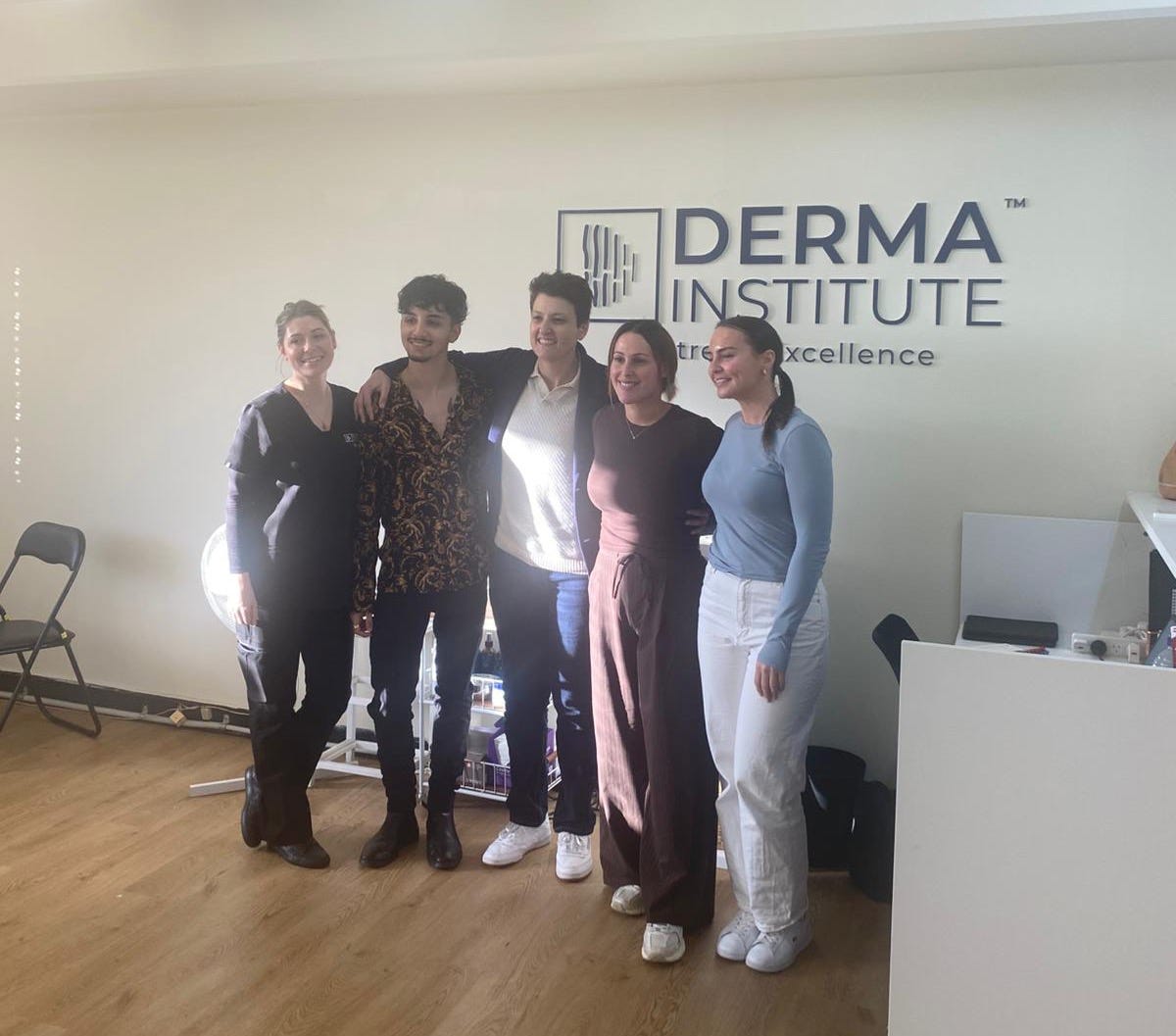
Being a trainer is honestly one of the hardest jobs I’ve ever had.
The only thing I would place above it is managing people’s emotions and mental health when they’re sitting across from you in a therapy session. But standing in front of a room filled with nine or ten doctors and nurses, teaching them about anti-wrinkle treatments, dermal fillers, anatomy, and safety, brings a completely different kind of pressure.
When I first started, I was terrified.
My mind would race before every training session.
What if they ask me something I don’t know?
What if I explain something incorrectly?
What if someone calculates the wrong dose?
What if a complication occurs during training?
What if a model develops a vascular occlusion? What would I do?
The thoughts seemed endless. I think that’s the funny thing about stepping into a new role. No matter how much experience you have, self-doubt has a way of creeping into the room before you do.
Then one day, I was thrown straight into the deep end. There wasn’t time to overthink it. There wasn’t time to analyse every possible outcome.
I remember thinking to myself, Okay, I’m a big girl. I signed up for this. I knew what I was getting into.
So I walked into the room and faced it head-on.
At first, I spoke far too quickly. My nerves had taken over, and I felt like I was trying to get through the presentation as fast as possible. But as the session progressed, something shifted.
I slowed down. I relaxed. I stopped focusing on myself and started focusing on the people sitting in front of me.
Instead of worrying about whether I sounded knowledgeable, I simply shared what I knew. And then something unexpected happened.
I realised I could talk about this topic for hours.
Years of experience, lessons, mistakes, successes, patient consultations, complications, and clinical observations were all sitting in my mind waiting to be shared. The knowledge I had spent so many years collecting suddenly flowed naturally.
Before I knew it, time had flown by.
Questions were answered. Topics were covered. Discussions were sparked. And for the first time, I stopped seeing myself as someone pretending to be a trainer.
I realised I actually was one.
Not because I knew everything—nobody does. But because I had enough experience, enough knowledge, and enough passion to help others learn. And that, I discovered, is what a great educator really is. It made me realise that I genuinely enjoy training and educating people.
In many ways, it feels like I’ve finally found something that I’m truly meant to do. There is something incredibly rewarding about watching someone’s confidence grow, seeing them understand a concept they once struggled with, or helping them become a safer and more competent practitioner.
And then there’s the feedback.
At the end of a long training day, hearing positive feedback from your students makes every moment of preparation, every nerve, and every responsibility worthwhile.
It’s now been about six months since I started teaching regularly, and what once felt intimidating has become second nature. The role has transformed me into a far more confident speaker, educator, and leader than I ever thought I could be.
I’ve had the privilege of teaching doctors, nurses, and healthcare professionals from all different backgrounds. But one thing I’ve learnt along the way is that education isn’t one-sided. While I may be the trainer in the room, I am constantly learning from those around me as well.
At the end of the day, we’re all human. We’re all learning. We’re all growing. And often, the difference isn’t what you know—it’s how you approach people, situations, and challenges.
Recently, one of my nurse trainees shared something with me that I’ll never forget.
They told me that one of the things they appreciated most about my teaching style was how calm and composed I remained. They mentioned that when I explained injection techniques, I did so with confidence and poise. More importantly, they said that I made them feel safe—that they knew they could rely on me if needed guidance or support.
I don’t think they realised how much those words meant to me.
Because beyond the anatomy lessons, product discussions, and injection techniques, that’s exactly the kind of trainer I strive to be.
Someone who creates a safe learning environment. Someone who supports rather than intimidates. Someone who teaches with patience rather than ego.
Hearing that feedback filled my heart with genuine joy. Not because it validated my knowledge, but because it reminded me that I had made a positive impact on another person.
And when I really think about it, that’s what this journey has always been about.
Not awards.
Not recognition.
Not status.
Just making a difference.
Because even if I’ve only made an impact on one person, that’s enough for me to know that I’ve done something right in this world.
And sometimes, that’s all the success we need.
Ardor x